
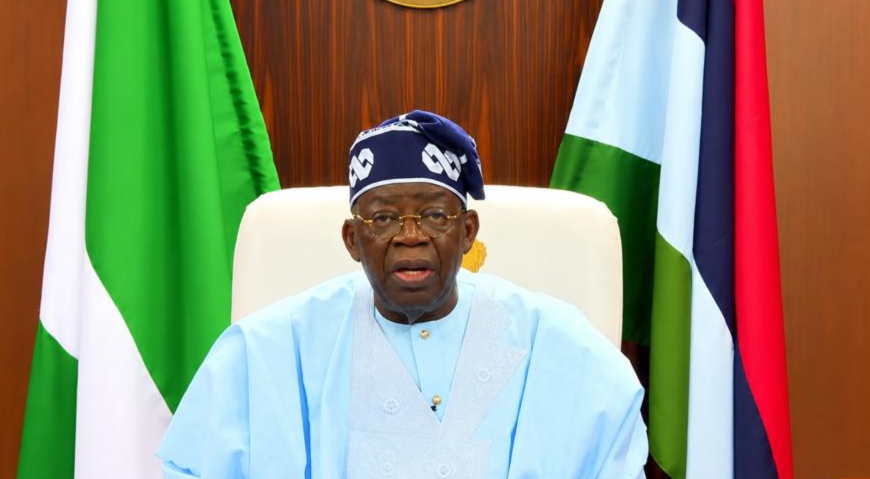
President Bola Tinubu has declared that Nigeria is entering a new phase of economic development focused on shared prosperity, job creation and improved living standards, following what he described as progress made through his administration’s economic reforms.
Tinubu made this known on Thursday, October 1, in his 66th Independence Day address to Nigerians, titled “From Reform to Prosperity,” in which he reflected on the country’s journey since independence and outlined his administration’s priorities for the years ahead.
The President acknowledged the economic difficulties Nigerians have experienced over the years, noting that the country had faced several challenges, including civil war, military rule, economic crises, insecurity and political instability.
He, however, maintained that Nigeria had continued to endure because of the resilience and determination of its citizens, including farmers, traders, teachers, entrepreneurs and members of the armed forces and security agencies.
Reflecting on the economic situation inherited by his administration in 2023, Tinubu defended the removal of what he described as long-standing economic distortions, arguing that the reforms were necessary to address structural weaknesses and establish a foundation for sustainable growth.
Using a medical analogy, he compared Nigeria’s previous economic policies to treating the symptoms of a serious illness rather than addressing its underlying cause, insisting that the difficult reforms were necessary despite their immediate impact on citizens.
He urged Nigerians to resist calls to reverse the policies, arguing that returning to unsustainable subsidies would undermine the progress already recorded.
According to the President, Nigeria’s economy has grown by more than four per cent in 2026, supported by contributions from both the oil and non-oil sectors.
He also cited a decline in oil theft, falling inflation from its peak, improved foreign reserves and greater stability in the foreign exchange market as evidence of economic recovery.
Tinubu further disclosed that Nigeria recorded its highest-ever non-oil export revenue in 2025, exceeding $6 billion, describing the development as evidence of growing opportunities for local businesses.
He said the government’s immediate focus had shifted from economic stabilisation to delivering prosperity that would be felt by ordinary Nigerians.
The President identified reducing the cost of living as a major priority, explaining that the government would focus on lowering production and transportation costs through increased agricultural output, infrastructure development and improved access to essential resources.
He listed mechanised irrigation, dry-season farming, improved access to seeds and fertilisers, agricultural mechanisation, storage facilities and investments in roads, railways and ports as measures aimed at boosting food production and improving distribution.
Tinubu also emphasised job creation and industrial expansion, particularly for young Nigerians, saying the administration would leverage the country’s gas resources to power industries, revive manufacturing centres, expand digital connectivity and equip workers with relevant skills.
He expressed his ambition to see more Nigerian-made products enter international markets and more young entrepreneurs establish businesses capable of creating employment opportunities.
Addressing the challenges facing low-income households, the President acknowledged that many Nigerians continued to struggle with the cost of food, education, healthcare and transportation.
He attributed the situation to decades of low productivity, inadequate infrastructure, limited economic opportunities and institutional shortcomings, while stressing that the government was working to improve conditions for vulnerable citizens.
As part of its social intervention efforts, Tinubu highlighted initiatives such as the National Social Register, the Nigerian Education Loan Fund (NELFUND) and the Consumer Credit Corporation (CREDICORP), which he said were designed to expand access to financial assistance, education and essential assets.
He also pledged continued collaboration with state and local governments to strengthen primary healthcare, basic education and other public services.
The President further stated that his administration had maintained timely payment of salaries and pensions since assuming office in 2023 and had introduced pension reforms intended to improve the welfare of retirees and vulnerable Nigerians.
While acknowledging that the effects of the reforms had not eliminated the immediate hardship experienced by many households, Tinubu maintained that sustained economic growth and expanded opportunities would be necessary to reduce poverty over time.
He called for patience, discipline and collective commitment, expressing confidence that the policies implemented by his administration would eventually translate into improved living conditions.
Tinubu concluded his address by urging Nigerians to remain united and forward-looking, describing the country’s next phase as an opportunity to turn its economic potential into tangible benefits for citizens.
He reaffirmed his belief in Nigeria’s future, saying the sacrifices made during the reform process should pave the way for a country where prosperity is widely shared and every child has the opportunity to achieve their aspirations.
The President wished Nigerians a happy 66th Independence Anniversary and prayed for the continued peace, unity and development of the Federal Republic of Nigeria.