

…How zoning, religion, and internal PDP crisis are shaping the race for the next governor
As the countdown to the 2027 governorship election gathers momentum in Oyo State, the question of who will succeed Governor Seyi Makinde has shifted from speculation to a central political contest, unfolding within an increasingly divided Peoples Democratic Party (PDP).
What might ordinarily have been a seamless succession process for a ruling party is now entangled in a two fold crisis: persistent leadership disputes at the national level of the PDP and emerging factional realignments within Oyo State.
At the heart of the unfolding scenario is Governor Makinde, whose political structure and influence are widely expected to determine the party’s eventual candidate.
However, even within his political camp, signals of uncertainty are becoming more pronounced.
A Party in Crisis, A State in Play
The PDP’s protracted national crisis defined by leadership tussles, ideological divisions, and weakening cohesion—continues to cast a shadow over its state chapters.
In Oyo State, this broader instability is beginning to manifest in subtle but meaningful fractures, as party stakeholders reposition themselves ahead of the 2027 elections.
Against this backdrop, a reported “consensus arrangement,” allegedly being fine-tuned within Makinde’s camp and expected around April 7, 2026, has sparked widespread debate.
The key question remains: will the governor endorse a preferred successor, or will competing ambitions disrupt the political structure he has built over time?
The implications are significant. Any misstep in managing the transition could erode the PDP’s hold on power in the state and create openings for opposition forces.
Aspirants and the Power of Perception
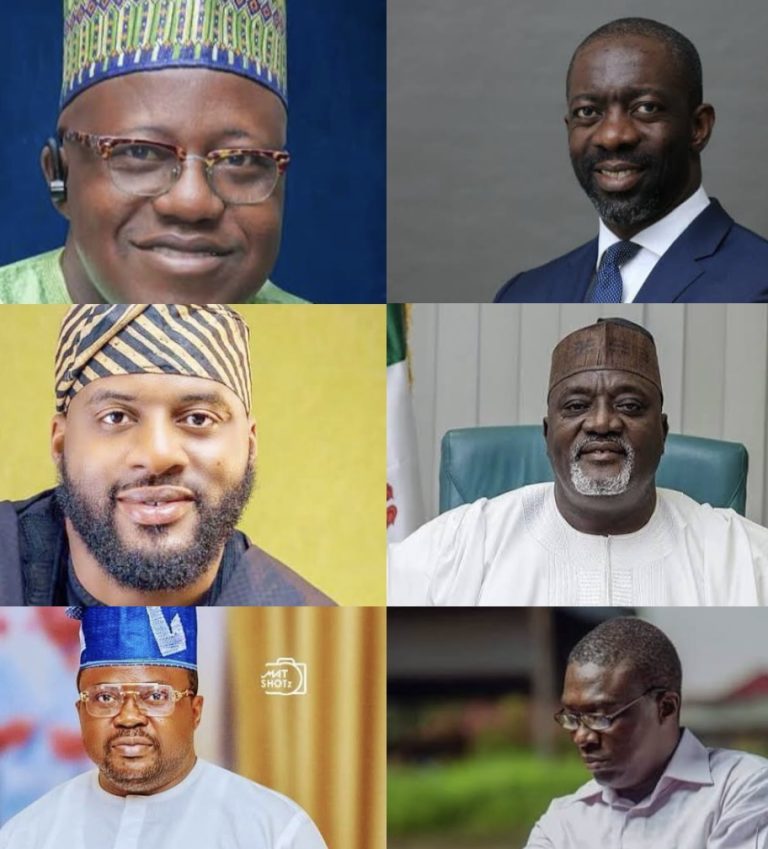
Even in the absence of formal declarations, a growing list of aspirants has emerged, each bringing not only political credentials but also narratives, some self crafted, others externally imposed.
Bimbo Adekanmbi, for instance, is viewed through the lens of his relatively recent defection from the All Progressives Congress (APC) after the 2023 elections.
Within PDP circles, this has contributed to a perception of him as an outsider, limiting his acceptance among party loyalists.
Yet, a counter narrative is gaining traction. Observers point to his appointment by Governor Makinde as chairman of the committee overseeing the renovation of Ladoke Akintola International Airport, Ibadan, as a sign of growing trust and possible strategic positioning within the governor’s inner circle.
While supporters interpret this as a pathway to relevance, critics argue that such proximity may symbolize continuity at a time when some voters are seeking new ideas and direction.
For Nureni Adeniran, the discourse centers on reach. Although he enjoys considerable grassroots support, questions remain about whether his influence can extend across the broader and more complex terrain of statewide governance.
Adebo Ogundoyin introduces a different dimension to the race, with his youth and dynamism widely acknowledged. However, detractors often reinterpret these strengths as indicators of limited experience, raising concerns about his readiness for the demands of leadership.
His origin from a minority zone within the state also presents a potential disadvantage, particularly within the context of zoning considerations that often shape political outcomes in Oyo.
Additionally, his Christian background has been highlighted by some critics who argue that the governorship should rotate to a Muslim candidate, further complicating his chances.
Despite the legacy of his late father in the Ibarapa zone, analysts suggest that structural and demographic realities may outweigh historical goodwill in determining his prospects.
Technocratic strength defines Dhikrullahi Stanley Olajide, but this too presents a paradox. While his intellectual capacity is widely acknowledged, it is sometimes framed as a disconnect from grassroots politics, where accessibility often outweighs technical depth.
Adebo Akande, on the other hand, has largely projected himself as an administrator throughout the current administration, rather than a core partisan figure.
This positioning has raised concerns among some stakeholders about his level of engagement with party structures, with critics suggesting it may affect his acceptance among loyal party members.
His religious identity has also entered the debate. As a Christian, like Governor Makinde, some observers believe this could become a factor in discussions around power rotation, especially among those advocating for a Muslim successor.
Collectively, these considerations may pose challenges to his emergence as a consensus candidate.
Beulah Adeoye’s candidacy is often viewed through the prism of representation and inclusivity.
While this lends symbolic strength to his campaign, critics warn that it could overshadow substantive policy discussions.
Supporters highlight his youth and intellectual promise, but his roots in the Oke-Ogun zone,a minority region may limit his appeal within the broader zoning framework.
Concerns have also been raised about the depth of his grassroots support, even within his home base, alongside religious considerations that continue to influence the wider succession debate.
Taofeek Arapaja, a veteran politician, faces scrutiny of a different kind. While his experience is undisputed, critics argue that his focus appears narrowly concentrated, particularly on economic issues, raising questions about his breadth of vision.
Segun Ogunwuyi’s profile reflects a recurring theme in Oyo politics the interplay between competence and political structure. Though widely regarded as capable, he is often seen as lacking the grassroots network required for electoral success.
For Olufemi Ajadi, ambition is evident, but questions persist regarding consistency and political alignment.
His previous governorship bid in Ogun State under the NNPP has led some critics to question his political direction and understanding of Oyo’s local dynamics.
Within the PDP, his influence is considered limited, and his relative unfamiliarity with the state’s political structure may hinder his chances of emerging as a strong contender.
Femi Babalola, meanwhile, brings a profile grounded in legal discipline and principled engagement.
However, critics have reframed this strength as rigidity, raising concerns about his ability to navigate the compromises often required in political leadership.
Makinde’s Balancing Act
At the core of these competing interests is Governor Makinde’s strategic calculation.
While his influence within the Oyo PDP remains significant, the party’s broader internal challenges complicate any straightforward succession plan.
A consensus candidate emerging from his camp could help consolidate power and present unity.
However, any perception of imposition risks deepening internal divisions, potentially triggering defections or parallel political alignments.
On the other hand, a fully open contest could expose underlying fractures, weakening the party’s cohesion ahead of the general election.
Beyond the Race: A Test of PDP’s Future
Beyond the immediate contest for the governorship, the unfolding developments represent a broader test of the PDP’s direction in Oyo State.
Will the party adapt and renew itself, or remain anchored in existing structures?
Can it manage internal differences while maintaining credibility among voters?
In this environment, perception has become as critical as political strength.
Each aspirant must not only build support but also counter narratives that could undermine their viability.
As the state edges closer to 2027, one reality stands out: the journey to Agodi Government House will be shaped not just by popularity or performance, but by strategy, alliances, and the careful management of political perception within a party striving to redefine itself.




Finally found a place where the luck actually kicks in! The interface is super user friendly and I had a great experience winning big at id777hoki.