

… Not a Gamble but Continuity , Debo Akande Is Oyo’s Most Prepared Successor
“We cannot predict the future, but we can invent it,” wrote Dennis Gabor in his 1963 work Inventing the Future ,x̌a line later popularised in management circles by Peter Drucker.
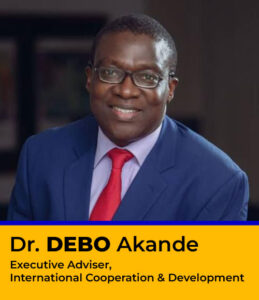
This idea mirrors the governance trajectory associated with Dr. Debo Akande in Oyo State.As the 2027 governorship race gathers momentum, the political conversation is shifting from uncertainty to clarity, from experimentation to continuity. Increasingly, stakeholders are asking not just who can govern, but who already understands the system in motion and has demonstrably contributed to its success.
For many, Dr. Debo Akande stands at that intersection.
NOT A TEST OF CAPACITY, BUT A CASE FOR CONTINUITY
Akande’s candidacy is not built on speculation. It is anchored on a verifiable record of strategic input and policy execution.
For a growing number of observers, this is not a question of whether he will perform if elected governor , it is about sustaining and scaling what he has helped to build over the years.
Even before the emergence of Governor Seyi Makinde, Akande was instrumental in developing the roadmap that shaped the administration’s economic direction, particularly in agribusiness and investment strategy.
From Pre – election conceptualisation to post election implementation, his contributions have been central to the policy architecture and successes of the current government. In effect, he represents continuity not a departure from an existing vision, but a deepening of it.
THE ARCHITECT OF A STRUCTURED AGRIBUSINESS ECONOMY
As Director-General of the Oyo State Agribusiness Development Agency (OYSADA) and a key driver of development partnerships, Akande led the transformation of agriculture in Oyo State from a fragmented system into a coordinated, investment driven sector.
Through the 2019 Agribusiness Development Strategy, he initiated a comprehensive, multi sectoral framework that integrated infrastructure, finance, environment and human capital into a unified plan.
The outcomes are tangible.
Oyo State now hosts over 20 agro processing industries, alongside improved investment inflows, enhanced rural infrastructure and a shift toward value added agriculture. Farmers now enjoy better access to markets, reduced post harvest losses and improved productivity.
As Edmund Burke argued in Reflections on the Revolution in France (1790), “Good order is the foundation of all good things.” In Oyo state, that order was not accidental , it was deliberately crafted, with Akande playing a central role in its design and execution.
PROVEN LEADERSHIP IN CRITICAL MOMENTS
Akande’s governance experience extends beyond planning into crisis management.
During the COVID-19 pandemic, he coordinated Oyo State’s food security response, assembling a team of experts across sectors to ensure stability in supply and distribution. While other states struggled with disruptions, Oyo maintained relative balance, reflecting a structured and proactive approach.
His international exposure and professional networks have also contributed to attracting development resources across sectors such as agriculture, health, education and ICT.
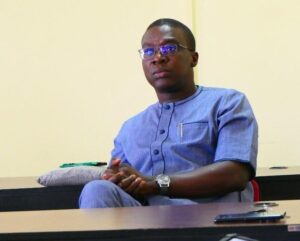
A HERITAGE OF SERVICE, A FUTURE OF IMPACT
Akande’s leadership philosophy is deeply rooted in a legacy of service.
With a family background that include, a judicial grandfather, a father who led farmers statewide, and relatives who held legislative leadership roles, his orientation toward governance reflects continuity of service rather than pursuit of power.
BEYOND TECHNICAL EXPERTISE
Though often described as a technocrat, Akande’s profile reflects a broader governance competence , combining policy depth with political awareness and grassroots engagement.
His extensive fieldwork across communities in Oyo State has given him direct insight into local realities, strengthening his capacity to design and implement people centred policies.
CONSOLIDATING GAINS, EXPANDING POSSIBILITIES
Akande’s vision for Oyo State is anchored on consolidation and expansion.
His priorities include strengthening existing achievements in agribusiness and infrastructure, advancing youth development through structured vocational systems, promoting local enterprise, and driving environmental sustainability.
It is a vision that builds on an existing foundation while positioning the state for greater economic competitiveness.
A DEFINING MOMENT FOR OYO STATE
In a political landscape where promises often outweigh performance, Akande’s profile offers a different proposition,one rooted in preparation, participation and proven results.
As philosopher Will Durant wrote in The Story of Philosophy (1926), summarising the ideas of Aristotle, “We are what we repeatedly do. Excellence, then, is not an act, but a habit.”
For many in Oyo State, Dr. Debo Akande’s consistent record of strategic thinking, execution and measurable outcomes positions him as more than a contender , but as a compelling choice for continuity and sustained development.
As 2027 approaches, the choice before the people may not simply be about electing a new leader, but about securing the future of a vision already
… Not a Gamble but Continuity , Debo Akande Is Oyo’s Most Prepared Successssor
“We cannot predict the future, but we can invent it,” wrote Dennis Gabor in his 1963 work Inventing the Future — a line later popularised in management circles by Peter Drucker.
This idea mirrors the governance trajectory associated with Dr. Debo Akande in Oyo State.
As the 2027 governorship race gathers momentum, the political conversation is shifting from uncertainty to clarity, from experimentation to continuity. Increasingly, stakeholders are asking not just who can govern, but who already understands the system in motion and has demonstrably contributed to its success.
For many, Dr. Debo Akande stands at that intersection.
NOT A TEST OF CAPACITY, BUT A CASE FOR CONTINUITY
Akande’s candidacy is not built on speculation. It is anchored on a verifiable record of strategic input and policy execution.
For a growing number of observers, this is not a question of whether he will perform if elected governor , it is about sustaining and scaling what he has helped to build over the years.
Even before the emergence of Governor Seyi Makinde, Akande was instrumental in developing the roadmap that shaped the administration’s economic direction, particularly in agribusiness and investment strategy.
From Pre – election conceptualisation to post election implementation, his contributions have been central to the policy architecture and successes of the current government. In effect, he represents continuity not a departure from an existing vision, but a deepening of it.
THE ARCHITECT OF A STRUCTURED AGRIBUSINESS ECONOMY
As Director-General of the Oyo State Agribusiness Development Agency (OYSADA) and a key driver of development partnerships, Akande led the transformation of agriculture in Oyo State from a fragmented system into a coordinated, investment driven sector.
Through the 2019 Agribusiness Development Strategy, he initiated a comprehensive, multi sectoral framework that integrated infrastructure, finance, environment and human capital into a unified plan.
The outcomes are tangible.
Oyo State now hosts over 20 agro processing industries, alongside improved investment inflows, enhanced rural infrastructure and a shift toward value added agriculture. Farmers now enjoy better access to markets, reduced post harvest losses and improved productivity.
As Edmund Burke argued in Reflections on the Revolution in France (1790), “Good order is the foundation of all good things.” In Oyo state, that order was not accidental , it was deliberately crafted, with Akande playing a central role in its design and execution.
PROVEN LEADERSHIP IN CRITICAL MOMENTS
Akande’s governance experience extends beyond planning into crisis management.
During the COVID-19 pandemic, he coordinated Oyo State’s food security response, assembling a team of experts across sectors to ensure stability in supply and distribution. While other states struggled with disruptions, Oyo maintained relative balance, reflecting a structured and proactive approach.
His international exposure and professional networks have also contributed to attracting development resources across sectors such as agriculture, health, education and ICT.
A HERITAGE OF SERVICE, A FUTURE OF IMPACT
Akande’s leadership philosophy is deeply rooted in a legacy of service.
With a family background that include, a judicial grandfather, a father who led farmers statewide, and relatives who held legislative leadership roles, his orientation toward governance reflects continuity of service rather than pursuit of power.
BEYOND TECHNICAL EXPERTISE
Though often described as a technocrat, Akande’s profile reflects a broader governance competence , combining policy depth with political awareness and grassroots engagement.
His extensive fieldwork across communities in Oyo State has given him direct insight into local realities, strengthening his capacity to design and implement people centred policies.
CONSOLIDATING GAINS, EXPANDING POSSIBILITIES
Akande’s vision for Oyo State is anchored on consolidation and expansion.
His priorities include strengthening existing achievements in agribusiness and infrastructure, advancing youth development through structured vocational systems, promoting local enterprise, and driving environmental sustainability.
It is a vision that builds on an existing foundation while positioning the state for greater economic competitiveness.
A DEFINING MOMENT FOR OYO STATE
In a political landscape where promises often outweigh performance, Akande’s profile offers a different proposition,one rooted in preparation, participation and proven results.
As philosopher Will Durant wrote in The Story of Philosophy (1926), summarising the ideas of Aristotle, “We are what we repeatedly do. Excellence, then, is not an act, but a habit.”
For many in Oyo State, Dr. Debo Akande’s consistent record of strategic thinking, execution and measurable outcomes positions him as more than a contender , but as a compelling choice for continuity and sustained development.
As 2027 approaches, the choice before the people may not simply be about electing a new leader, but about securing the future of a vision already set in motion.